 QUEBEC CITY / TORONTO – In a rare display of bureaucratic unanimity, two Canadian provinces issued public hazard warnings today about the dangers of viewing this year’s fall foliage, without appropriate eyewear. Leaf experts in Ontario and Quebec had alerted the provincial governments that the colours of the foliage this year were exceptionally vivid and a potential health hazard.
“We can’t take chances with public safety when the colours get this bright and laser-sharp,” said Alfred Ottenburg, a spokesperson for the Ontario ministry of moss and foliage in Queen’s Park. “Too many people wound up in the hospital with eye damage three years ago when they viewed the foliage without government-approved leaf goggles.” Ottenburg stressed that the leaves had also been unusually “intense and vivid” in 2014.
Jean-Paul Carboniere, who is with le ministère des feuilles et de la mousse in Quebec City, echoed Ottenburg’s stern caution. “We’re here to protect people from their worst impulses,” he said. “Here in Quebec, there are massive leaf-watching events every weekend. Eye damage from looking directly at the fall leaves in their colourful totality, can be dynamite!”
As yet, there are no federal regulations that prevent people from viewing unsafe fall foliage.
Both Carboniere and Ottenburg advised that if leaf peepers were careful to wear protective eyewear, there would be no danger. Speaking for both ministries, Ottenburg emphasized that leaf-peeping goggles were available from their respective provincial organizations for $895.00, plus sales tax.
“Or you could get them at Wal-Mart for $3.49,” he said, but they’re not government approved.” Source: FNT Staff
Photo credit: Original images at: Ottawa Citizen/Kourtney Derouin
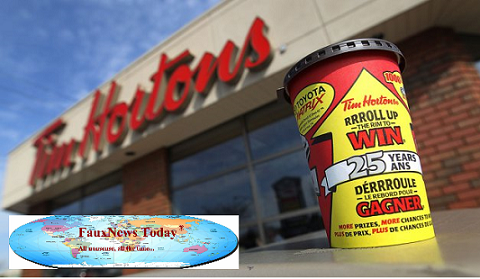 OTTAWA – A leaked document from the Canada Revenue Agency shows that a 2017 tax code change will allow for taxing all past and future winners of free coffee in the Tim Hortons RRRoll Up The Rim To Win contest. The document also noted that the CRA will be hiring thirty thousand additional employees before the end of 2017, to enforce the new tax code.
 FauxNews Today ®