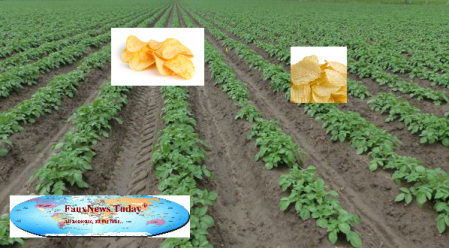
 GUELPH, ONTARIO – Two first-year research students in horticultural science at the University of Guelph have successfully completed an experimental small-plot olericulture study in growing a potato chip cultivar. The students were able to produce two different varieties of potato chips, plain and ripple.
Alfred Carver, twenty-two, one of the researchers, who is from the Musquodoboit Valley in Nova Scotia, said that the results have yet to be ratified by the Ontario Ministry of Agriculture, but he is “one-hundred percent confident” that the project was a “major step in food science.” The other member of the research team is Jeremy Winslow, twenty, from Kinuso, Alberta.
“We’ve been able to grow both kinds of chips right from scratch and eliminate the potato processing plant completely,” Carver said. “Straight from the tuber to the table, so to speak. No slicing, blanching and deep frying necessary.”
Their supervising professor, Jason D. Ancaster, said that the results of the project were all the more remarkable in that the two varieties of potato chips that were successfully grown weren’t started from gene-bank plantlets or microtubers. “They just planted plain old garden-variety chip sections that came straight from the grocery store,” he said. “You know, the odd-sized crumbly pieces that you usually find in the bottom of the chip bag.” He also cautioned potential large scale potato chip growers that the small-plot yields of the university study might not spool up to produce commercial yields. “Best wait a bit,” was his advice for impatient commercial growers. “By next season, we’ll have more of the bugs worked out. The guys are planning a ketchup-flavoured variety that should be worth the wait.”
Winslow, said that growing the chips from “the gound up” was a challenge, but “a way cool thing to do.” He admitted however that there were a few setbacks along the way.
“The low sodium variety that we tried didn’t work out so well,” he said. “They turned out to be soggy and stale as soon as we dug them out of the ground. We think it was a salinity thing with the soil.” Source: FNT Staff
Photo credit: Original images by Purple Sheep Wikia and WebstrauntStore
 OTTAWA – The Canadian government announced today that it is launching a federal Time Zone Swap Credits Program (TZSCP), to begin on January 1st, 2027. The program is similar to the existing carbon credit system adopted by governments to trade greenhouse gasses worldwide.
