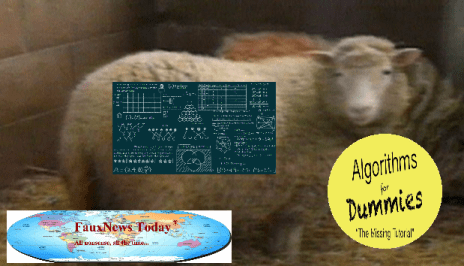
 EDINBURGH – A team of geneticists and computer scientists has collaborated to take another small step into the brave new world of somatic cell manipulation, with an added e-twist. The result of the unusual collaboration is E-Dolly the sheep, the world’s first mammal programmed with an ancillary module of artificial intelligence.
The E-Dolly project came about more or less by happenstance; the brainlamb of a nastytug-of-war over the ever-shrinking pot of research money. Geneticist, and spokesperson for the team, Erwin Mengelesinger, explained the circumstances to FauxNews Today.
“Sometimes one has to make sacrifices for science,“ he said. “There was only one source of funding and it was up for grabs by all the research faculties. We had no choice but to get creative on this genetic project or lose the whole package. So we joined forces with the computer geeks. What could possibly go wrong?”
Team lead for the computer scientists, Georgio Hunseker, didn’t see the E-Dolly project as a sacrifice however. “This is the first time we’ve been able to program algorithms directly into a model organism ,” he said. “So it’s a great opportunity. But we are peeved about having to split the funding.”
While the two scientists were being interviewed, a fight broke out between six other members of the two team-factions over a decision as to whether or not to put a manual override switch into E-Dolly’s AI module.
“We definitely need to de-couple the AI from her regular brain functions,” explained Mengelsinger. “Or she will wind up behaving like Jekyll & Hyde.”
At press time, while the geneticists and computer nerds were still arguing over how to fine-tune E-Dolly’s algorithms, the sheep was observed working on picking the lock between her pen and the feed lot next door. Source: FNT Staff
Photo credit: Created from images at: AdrianMejia ,ABC News ,Medium/Grant Timmerman
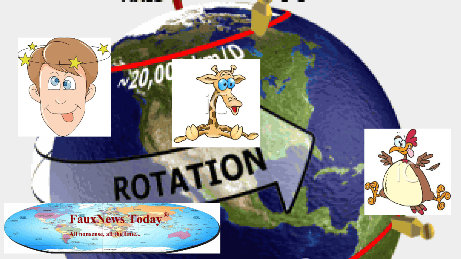 BOULDER, CO – Scientific tribalism showed its face at the window after news was released at the annual meeting of the Geological Society of America that the rotation of the Earth is slowing. The geological community has predicted dire warnings about
  FauxNews Today ®