 OTTAWA – In response to an article in the Toronto Star, the RCMP has changed the personal questions on an interview screening-form for people wanting to enter Canada as refugees. They are now screening asylum seekers with questions about their personal preferences in fruits and vegetables.
The change to the screening questionnaire came after the government was accused of singling out Muslims who sought refuge in the country to escape persecution. The previous document trampled all over asylum seekers’ personal space and assaulted their dignity by asking probing but irrelevant questions involving their articles of clothing, cultural customs and religious practices. The information was then stored in a police database.
FauxNews Today reached a data analyst for comment about the new interview questions on the form, at the Mounties’ headquarters in Ottawa. He refused to give his real name, citing “national security”, but agreed to speak anonymously, going by the pseudonym of “Ron.”
“Ron” admitted that he and many of his analyst colleagues were disappointed that they weren’t allowed to ask questions and collect personal information about “hijabs and niqabs” now, but he was adamant that the “new and improved” forms would successfully screen refugee claimants for “inclusiveness and fealty”, pick up on any “moral failings” and above all, “help make Canada a safer place to live”.
“We know that terrorists eat fruits and vegetables,” he said. “And we know that people who like apricots and celery can’t be trusted. So once we get the information from the screening questionnaires entered into our databases, we’ll know exactly who the potential terrorists are, and Canadians will be protected.”
“Ron” wouldn’t say how the security establishment had determined that asylum seekers who liked apricots and celery couldn’t be trusted, claiming that the data they had collected was “highly classified” and “couldn’t be released because of national security.”
He swore that the research was sound, however, and that his credentials included three doctorates, one in psychology, one in plant science and one in Microsoft Excel.
“Trust me,” he said. “I have twenty-one post-nominal letters after my name, so I know what I’m talking about.” Source: FNT Staff
Photo credit: Original images at: CBC , Yasaroglu Apricot CO. and Top Spot Fruit Mart
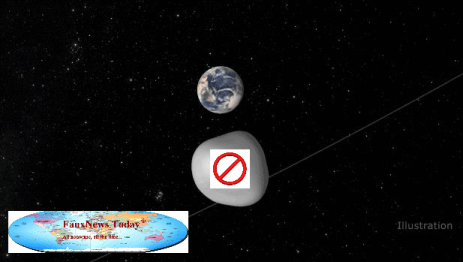 OTTAWA – The federal government responded instantly today to rising public concerns that possibly a rogue asteroid would pass dangerously close to Earth on Thursday. It snapped into action and banned the space rock from entering the atmosphere in Canadian airspace.
 FauxNews Today ®